
Many corporate administrators are now turning to mid century modern interior design ideas as a proven strategy to streamline operations and enhance employee output.
By embracing the “form follows function” philosophy, this aesthetic strips away unnecessary distractions, replaced by clean lines and organic textures that foster deep work.
Whether you are managing a bustling CBD firm or a boutique agency, incorporating these timeless principles into your commercial environment creates a sophisticated, focus-driven atmosphere. Let’s explore thirty actionable ways to transform your office into a high-performance sanctuary.
1. Tapered-Leg Desks
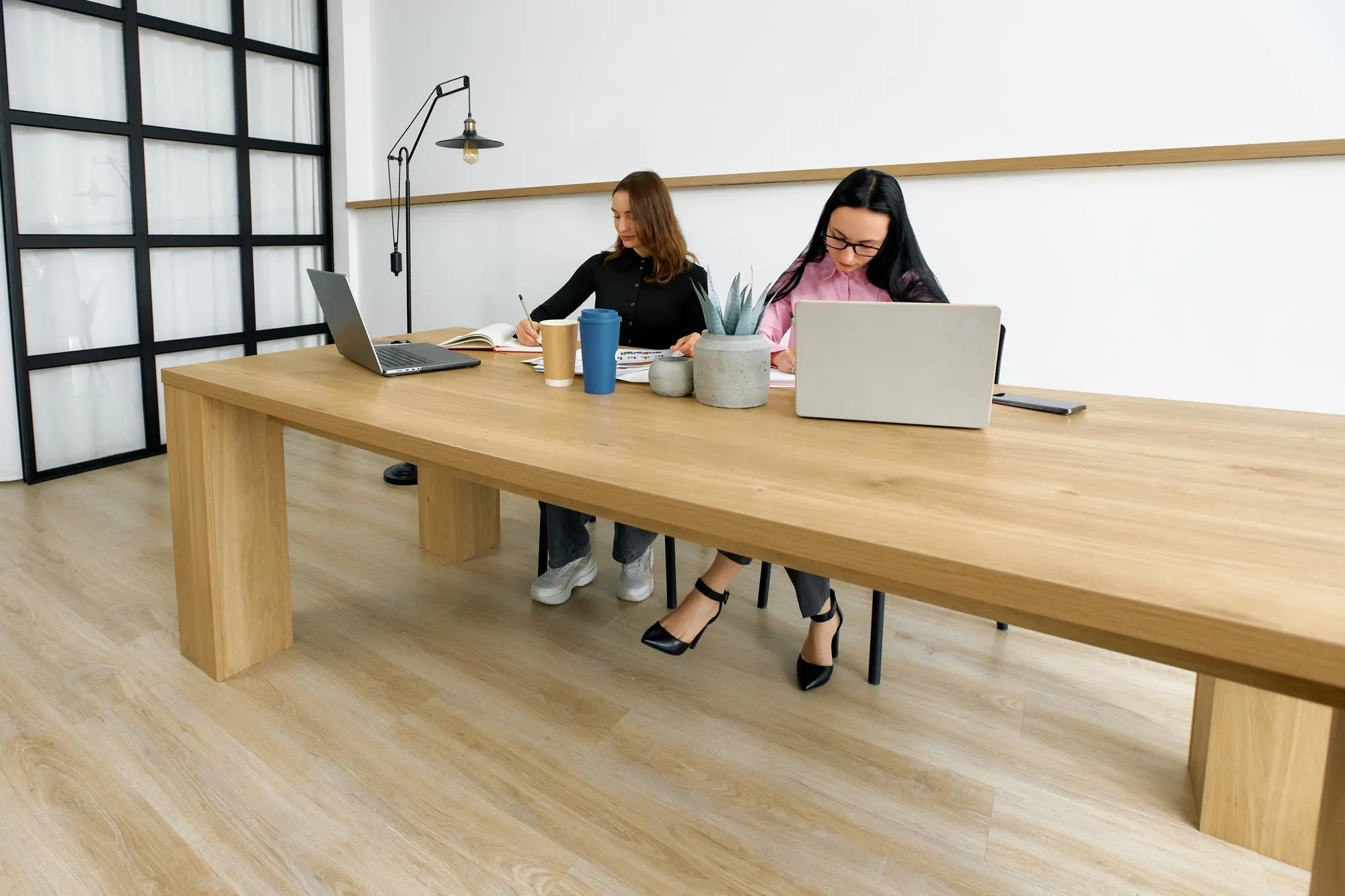
The “compass” or tapered leg is perhaps the most recognisable hallmark of the mid-century era, and its application in a modern commercial office is a masterclass in spatial psychology.
This architectural sleight of hand is a vital asset for Singaporean firms operating in compact CBD suites where every inch of perceived space counts. This logic of maximising visual floor space is simple but profound; the more floor area the eye can see, the larger a room feels.
Unlike traditional, heavy executive desks that act as solid blocks of wood, tapered-leg desks allow light and sightlines to pass underneath. This effectively reduces the claustrophobic feeling of being “boxed in” at a workstation, allowing employees to feel more relaxed and less confined during long hours of deep work.
When selecting the ideal timber for these pieces, the choice usually comes down to the rich grains of Walnut or the golden hues of Teak. Walnut offers a deep, sophisticated finish that commands authority in a boardroom setting, while Teak provides a lighter warmth that brightens up darker office corners.
Both woods provide an organic richness that adds character to the office without the visual weight that typically makes furniture feel cumbersome or dated. To truly boost focus, these desks move away from bulky, floor-length pedestals in favour of a minimalist silhouette.
2. Integrated Cable Management
While we admire the aesthetics of the 1950s, we certainly do not miss the lack of technology that defined the era. The “digital noise” of tangled power cords and HDMI cables can quickly shatter the serenity of a well-designed office, leading to a fragmented workflow.
Modern commercial adaptations now focus on “hiding the hum” of technology through hidden grommets and custom-drilled cable routes. For those using authentic-style desks, we recommend using brass or matching wood-veneer caps rather than cheap plastic inserts.
These allow wires to dive straight through the desk surface rather than draping over the edge, maintaining the clean, horizontal lines that define the MCM style.
To keep the area beneath those beautiful tapered legs clear, sophisticated under-desk channels are essential. We utilise J-hooks and mesh trays mounted to the underside of the desktop to ensure that power bricks and excess cord lengths stay off the floor.
Not only does this look significantly better, but it also makes office maintenance more efficient and prevents the distracting visual clutter that sits in a staff member’s peripheral vision. For a truly premium touch, many Singaporean firms are now opting for wireless charging inlays.
Integrating Qi-standard charging pads directly beneath the wood veneer allows executives to power up their devices by simply placing them on the desk. This eliminates the need for unsightly cables altogether, keeping the workspace looking like a piece of fine furniture rather than a server room.
3. Ergonomic Eames-Style Task Chairs
A common concern for business owners is that “designer” chairs might look impressive but result in backaches by lunchtime. However, the evolution of the Eames Aluminium Group has proven that you can honour a 1950s silhouette while providing the 21st-century support required for rigorous focus sessions.
When sourcing seating for your team, it is crucial to select models that incorporate the modern Aluminium Group evolution. This includes features like pneumatic gas lifts and tilt-tension mechanisms that allow for micro-adjustments throughout the day.
The ability to shift your sitting angle is essential for maintaining blood flow and concentration during 8-hour workdays, blending iconic ribbed backrests with modern mechanical precision.
Material breathability is another vital factor, especially within Singapore’s humid climate. While classic top-grain leather offers an unmatched executive feel, high-performance mesh alternatives provide excellent ventilation for daily use.
Choosing a high-quality mesh in a charcoal or deep tobacco hue maintains the professional aesthetic while keeping staff cool and comfortable. Furthermore, the intentional lumbar integration found in these designs is not merely for show; it is engineered to mimic the natural S-curve of the human spine.
This organic curve helps prevent the physical fatigue and “slump” that leads to an afternoon productivity dip. When the body is properly supported, the brain can divert more energy toward the task at hand rather than managing physical discomfort, leading to proven results in employee output.
4. Horizontal Wood Or Brass Trays
Maintaining a clear desktop is fundamental to sustaining mental clarity, yet the traditional approach to office organisation often introduces more visual noise than it eliminates. Mid-century design solves this by championing the power of low profiles.
Unlike vertical file holders that create jagged, upright barriers on a desk, horizontal wood or brass trays preserve the clean, lateral lines of the furniture.
This approach ensures that your line of sight remains uninterrupted, preventing the desk from feeling cluttered even when active paperwork is present. By keeping documents flat and low, the brain perceives a more orderly environment, which significantly reduces the cognitive load during intense periods of work.
Achieving a truly professional look requires careful attention to material harmony. We recommend matching the finish of these trays to your existing desk hardware; for instance, a walnut desk with brass handles is perfectly complemented by solid brass document trays.
This level of detail communicates a sense of stability and intentionality to both clients and staff. Beyond aesthetics, these tools facilitate zoned organisation. By designating specific trays for “Inbound,” “Active,” and “Archived” tasks, you create a physical workflow that mirrors a focused mind.
5. Brass Pharmacy Lamps Or Adjustable “Grasshopper” Style Lamps
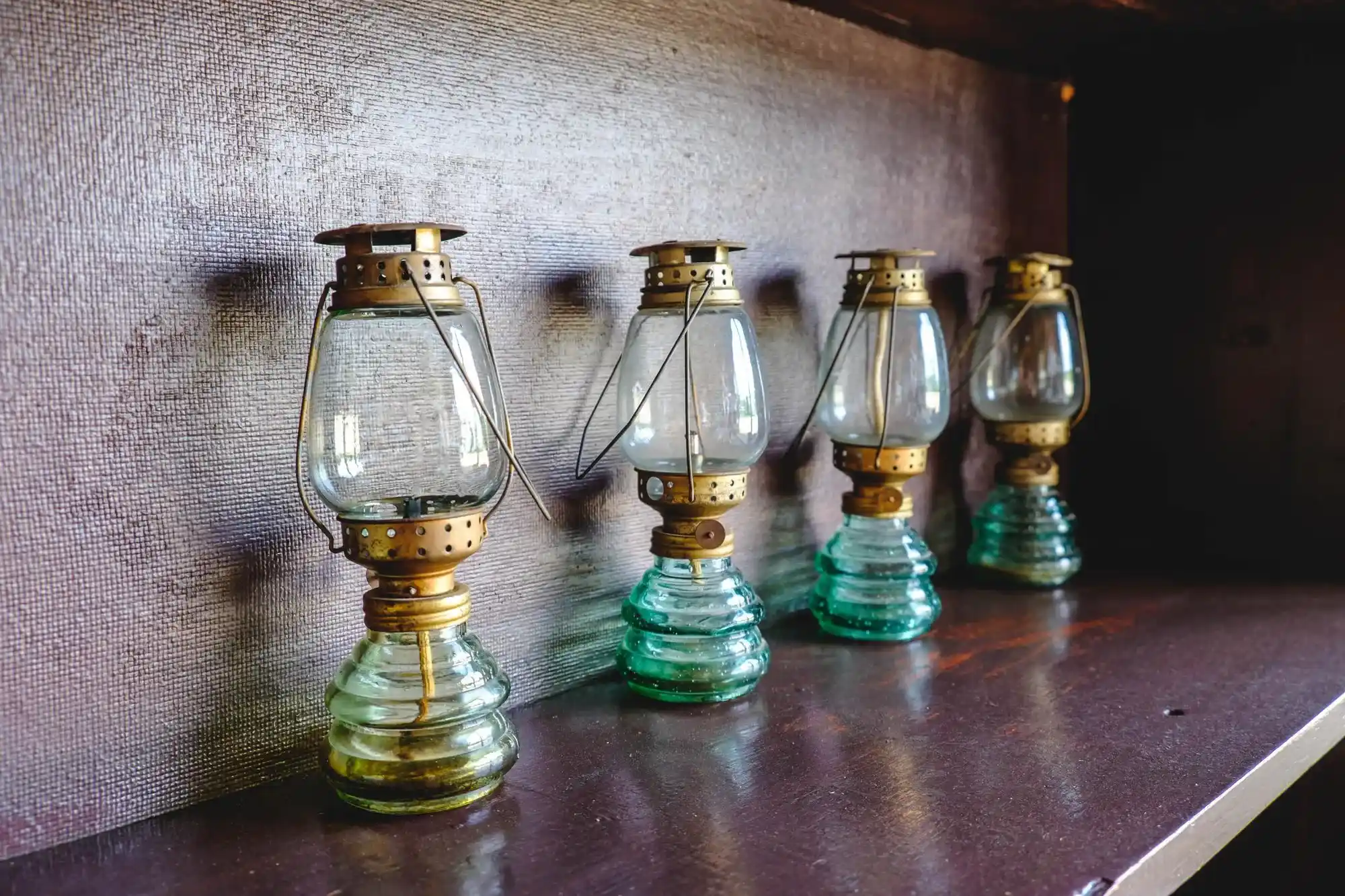
Lighting is often an overlooked factor in commercial productivity, yet it is perhaps the most influential element in reducing physical fatigue. In a professional setting, the shift from generic ambient lighting to targeted task lighting is essential for directing focus.
The iconic “Grasshopper” style lamp, with its signature tripod stand and adjustable conical shade, is a prime example of functional design.
Using the adjustable neck of such a lamp allows a user to eliminate shadows on paperwork or tactile models, providing a dedicated “pool of light” that signals the brain it is time for deep concentration.The modern office must balance warmth with modern functionality.
When selecting bulbs, we opt for LEDs that mimic the soft, comforting glow of vintage incandescents, roughly 3000K to 3500K, without the distracting heat or energy consumption of older technology.
This warmer light is far kinder to the eyes during long Singaporean evenings than harsh, blue-toned overhead fluorescents. Strategic anti-glare positioning is equally vital; the opaque brass shades of pharmacy lamps are designed to be angled precisely.
6. Install Slatted Wood Dividers Between Desks
Open-plan offices are excellent for collaboration, but they can be disastrous for individual focus if not managed correctly. Installing slatted wood dividers allows you to create “private pods” that provide the psychological safety of a private office without sacrificing the team’s social connection.
These rhythmic, architectural lines offer semi-permeable privacy, effectively blocking distracting peripheral movement from colleagues walking by while still allowing natural light to filter through the room.
This ensures that the workspace remains bright and energetic rather than feeling like a series of closed-off cubicles.
The uneven, ribbed surface of wood slats also serves a critical technical purpose: acoustic diffusion. In a busy commercial environment, sound bounces off flat walls and glass, creating an exhausting echo.
Slatted dividers break up these sound waves, softening the overall noise level of the office and making it easier for staff to stay “in the zone.” By utilising verticality in design, floor-to-ceiling slats can define specific workstations or departments without the need for permanent, costly structural walls.
This flexibility is particularly useful for growing businesses in Singapore that need to adapt their floor plans quickly while maintaining a high-end, bespoke aesthetic that reflects their brand’s sophistication.
7. Choose Furniture With A Matte Oil Finish
Opting for a duller, natural finish over the high-gloss lacquers prevalent in traditional corporate suites is a strategic choice for ocular comfort.
In a professional setting, reducing light refraction is paramount; matte surfaces minimise the “sparkle” and harsh reflections from overhead lighting that can distract the eye during periods of deep work.
By softening the way light interacts with the desk surface, you create a more stable visual environment that allows the user to focus entirely on their monitor or documents without the interference of glare.
Beyond the visual benefits, there is a significant element of tactile comfort associated with “raw” wood textures. Touching natural, oil-finished timber provides a grounding sensory experience that can lower stress levels, a welcome advantage in Singapore’s high-pressure business landscape.
From a practical standpoint, matte finishes offer superior ease of maintenance in high-traffic commercial zones. Unlike glossy surfaces that highlight every smudge and oily fingerprint, a matte oil finish hides daily wear and tear effectively.
8. Limit Decor To 1–2 “Analog” Items
Adopting a “less is more” approach to desk decor is essential for keeping the mind tethered to the task at hand. This philosophy encourages an “analog” connection, suggesting that administrators curate a few high-quality items,perhaps a mechanical flip clock or a substantial brass paperweight,rather than a sea of plastic trinkets.
These tactile, non-digital objects provide a sense of permanence and history, grounding the workspace in a way that feels sophisticated rather than cluttered. By limiting the number of items, each piece becomes an intentional statement that inspires creativity rather than a source of peripheral distraction.
Maintaining a visual breathing room is just as critical as the furniture itself. In mid-century modern design, empty space on a shelf or desk is viewed as a functional element rather than an overlooked gap.
This “white space” allows the brain to rest and prevents the feeling of being overwhelmed by surrounding objects. Intentional curation ensures that the office remains a place of work rather than a showroom for collectibles.
9. Use Large-Scale, Low-Pile Geometric Rugs
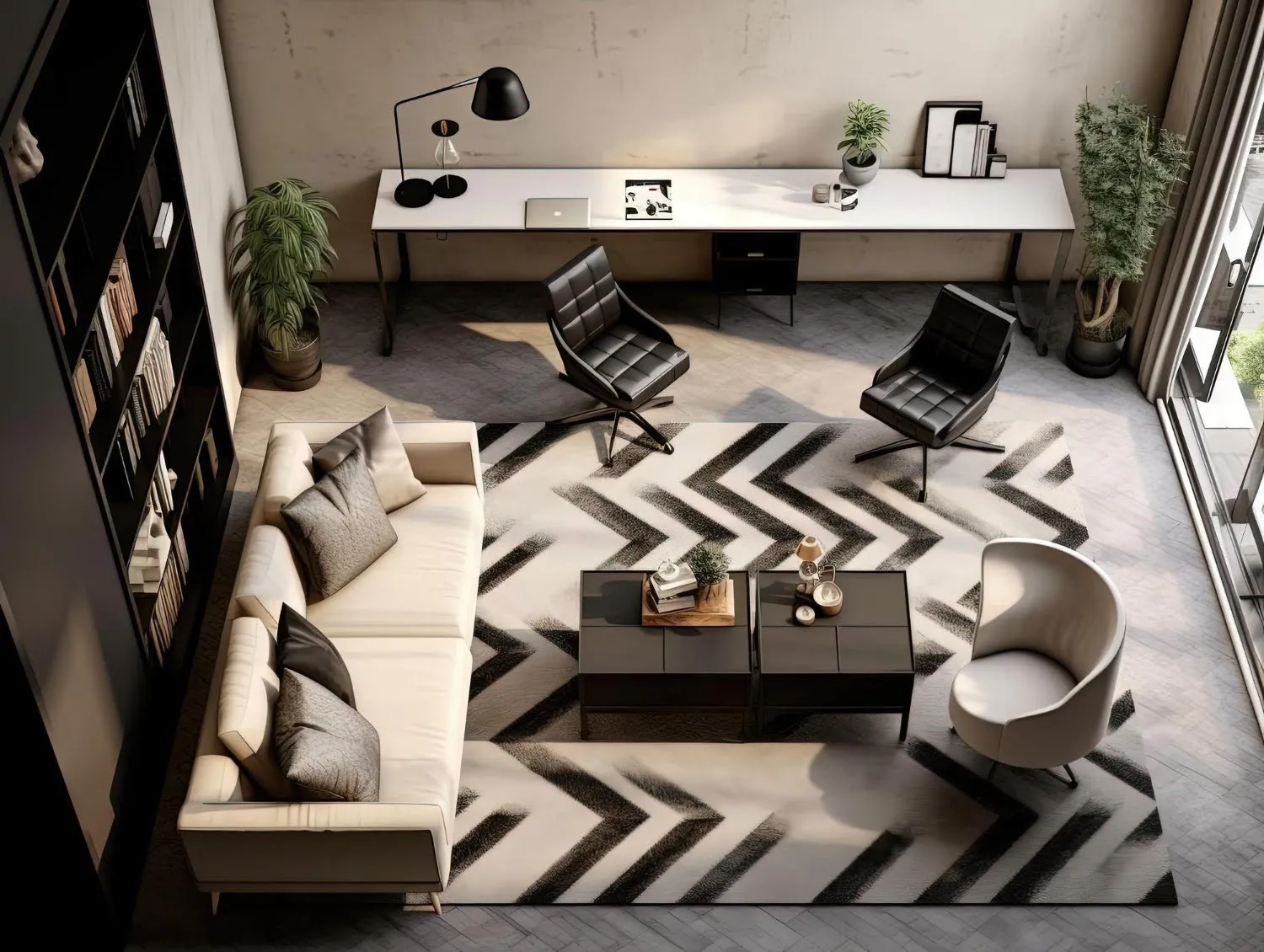
In an open-plan office, rugs serve as vital “zoning tools” that mentally separate high-traffic walkways from quiet, dedicated work areas.
By placing a large-scale rug beneath a group of workstations, you define a “Focus Zone,” creating a psychological boundary that signals a shift from social movement to concentrated effort.
This spatial definition helps employees feel more anchored in their specific area, reducing the feeling of being exposed in a large, empty hall. It is a highly effective way to organise a commercial floor plan without the need for restrictive physical barriers.
Practicality is equally important when selecting textiles for a busy firm. Low-pile wool rugs are the preferred choice for commercial interiors as they provide excellent acoustic insulation, significantly dampening the sound of clicking footsteps and rolling office chairs.
This reduction in ambient noise is crucial for maintaining a quiet atmosphere conducive to analytical thinking. When it comes to aesthetics, following MCM pattern logic means choosing subtle, repeating geometries.
These designs add a layer of professional sophistication to the room without being overstimulating. A well-chosen geometric rug anchors the furniture and provides a cohesive foundation that ties the entire office aesthetic together.
10. Add High, Narrow Windows
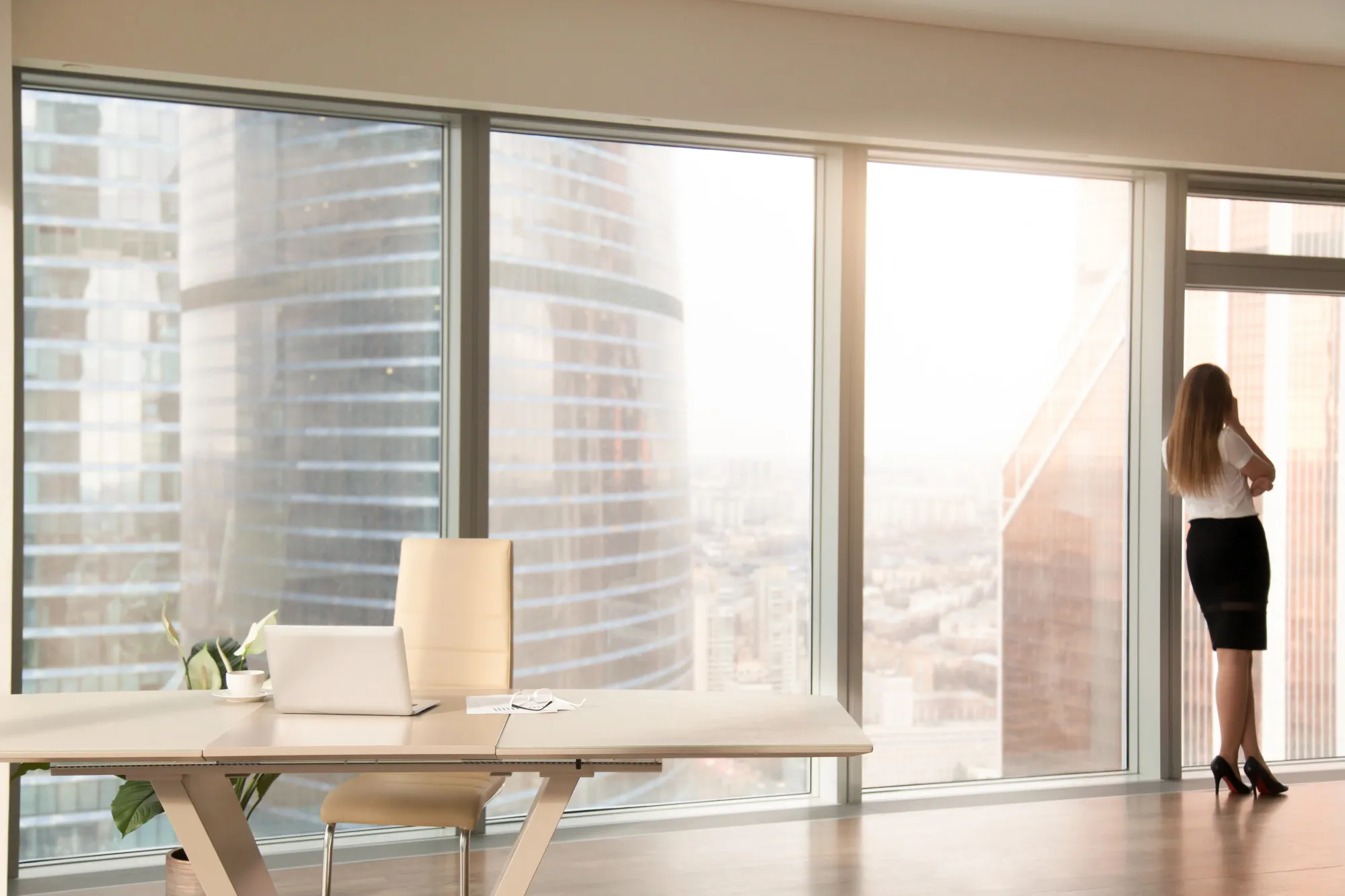
In the quest for a productive workspace, light is often a double-edged sword; while essential, it can bring the unwanted distractions of a busy street. Incorporating high, narrow “clerestory” windows is a hallmark of mid-century architecture that solves this dilemma by bringing in abundant natural light from above.
This top-down illumination is instrumental in optimising the circadian rhythm, helping to regulate the body’s internal clock and provide a natural energy boost that combats the dreaded afternoon slump.
By positioning windows above eye level, you ensure the office remains flooded with vitamin D without subjecting staff to the visual clutter of passing traffic or neighbouring buildings.
This approach offers privacy by design, allowing employees to see the sky and changing weather,which has been shown to reduce stress,while effectively blocking out the chaotic urban landscape of Singapore.
Furthermore, high windows promote a more uniform light distribution across the entire floor plan. Unlike standard eye-level windows that often create “glare zones” on computer monitors or cast long, distracting shadows across desks, clerestory windows provide a soft, ambient glow.
11. Create A “Conversation Pit” For Breaks
The 1960s sunken lounge is making a sophisticated comeback in the modern commercial world as a dedicated space for mental “resetting.” In a contemporary office, this “conversation pit” serves as a psychological anchor.
The level-shift reset,the act of physically stepping down into a lower area,signals a “brain break” to the body, helping employees to detach momentarily from the high-pressure demands of their workstations.
This physical transition is a powerful tool for stress management, allowing for a genuine moment of recovery before returning to complex tasks.
Beyond personal respite, these pits are excellent for encouraging communal seating and face-to-face interaction. In an age dominated by digital messaging, having a designated, comfortable area for quick syncs fosters a stronger sense of team cohesion and spontaneous brainstorming.
To enhance the experience, we recommend utilising soft textures like bouclé or velvet fabrics for the upholstery. This provides a vital sensory contrast to the hard, smooth surfaces of work desks and technology.
12. Arrange Furniture In Slightly Curved Paths
Breaking away from the rigid, grid-like office layouts of the past can have a profound impact on the overall “vibe” and productivity of a firm. Arranging furniture in slightly curved paths is a design strategy that moves toward a more natural and less stressful workflow.
These organic curves mimic the patterns found in nature, which is a proven method for softening the environment and lowering cortisol levels among staff. A space that feels fluid rather than clinical encourages a more relaxed mental state, which is often the catalyst for creative problem-solving and sustained focus.
Designing paths that lead employees through the office in a fluid motion also encourages healthy movement. Instead of marching down narrow, straight corridors, staff navigate the space in a way that feels intuitive and less “robotic.”
This layout also serves a significant technical function by reducing “impact” noise. Long, straight hallways act as acoustic tunnels that amplify the sound of footsteps and voices; by introducing curves and varying the angles of furniture, you disrupt these sound paths and prevent distracting echoes.
13. Use Modular Shelving Systems
The versatility of modular systems, such as the iconic “String” shelving or Poul Cadovius units, offers an elegant solution for commercial storage that traditional cabinets simply cannot match.
These wall-mounted systems champion the concept of floating efficiency; by keeping the floor clear of bulky furniture, the office immediately feels larger and more organised.
This lack of visual obstruction at the floor level creates a sense of continuity that is particularly beneficial for Singaporean offices looking to maximise a modest footprint while maintaining an airy, high-end feel.
Beyond aesthetics, modular shelving is a strategic investment for scalable growth. As a company’s storage needs evolve, these systems allow administrators to add, remove, or reposition shelves and cabinets without needing a full office refit. This flexibility ensures that the workspace remains functional as the team expands.
Furthermore, open shelving provides a unique opportunity for visual organisation. It allows a business to curate brand-aligned literature, professional awards, and historical artefacts in a way that feels like an integrated part of the architecture.
14. Use Black Steel Or Wood-Framed Glass Walls
Achieving a balance between the mid-century desire for transparency and the modern need for acoustic privacy requires a sophisticated approach to partitioning. Utilising glass walls framed in black steel or rich wood allows for “open-concept” living while providing the quiet necessary for high-stakes decision-making.
This layout is vital for maintaining sightlines across the office; it ensures that managers and teams remain visually connected, fostering a culture of transparency and accessibility even when individuals are working behind glass.
The choice of framing material can significantly alter the “vibe” of the commercial space. Black steel frames offer a sharp, industrial MCM fusion that adds a modern, professional edge to an office dominated by wood-heavy furniture. Conversely, wood-framed glass walls lean into the warmth of the era.
Regardless of the material, the primary benefit remains acoustic isolation. These partitions are elite at blocking out the general “hum” of the office,ringing phones, coffee machine chatter, and keyboard clicks,making them the perfect choice for sensitive board meetings or private client calls.
15. Install “Felt-Backed” Vertical Wood Slats On Walls
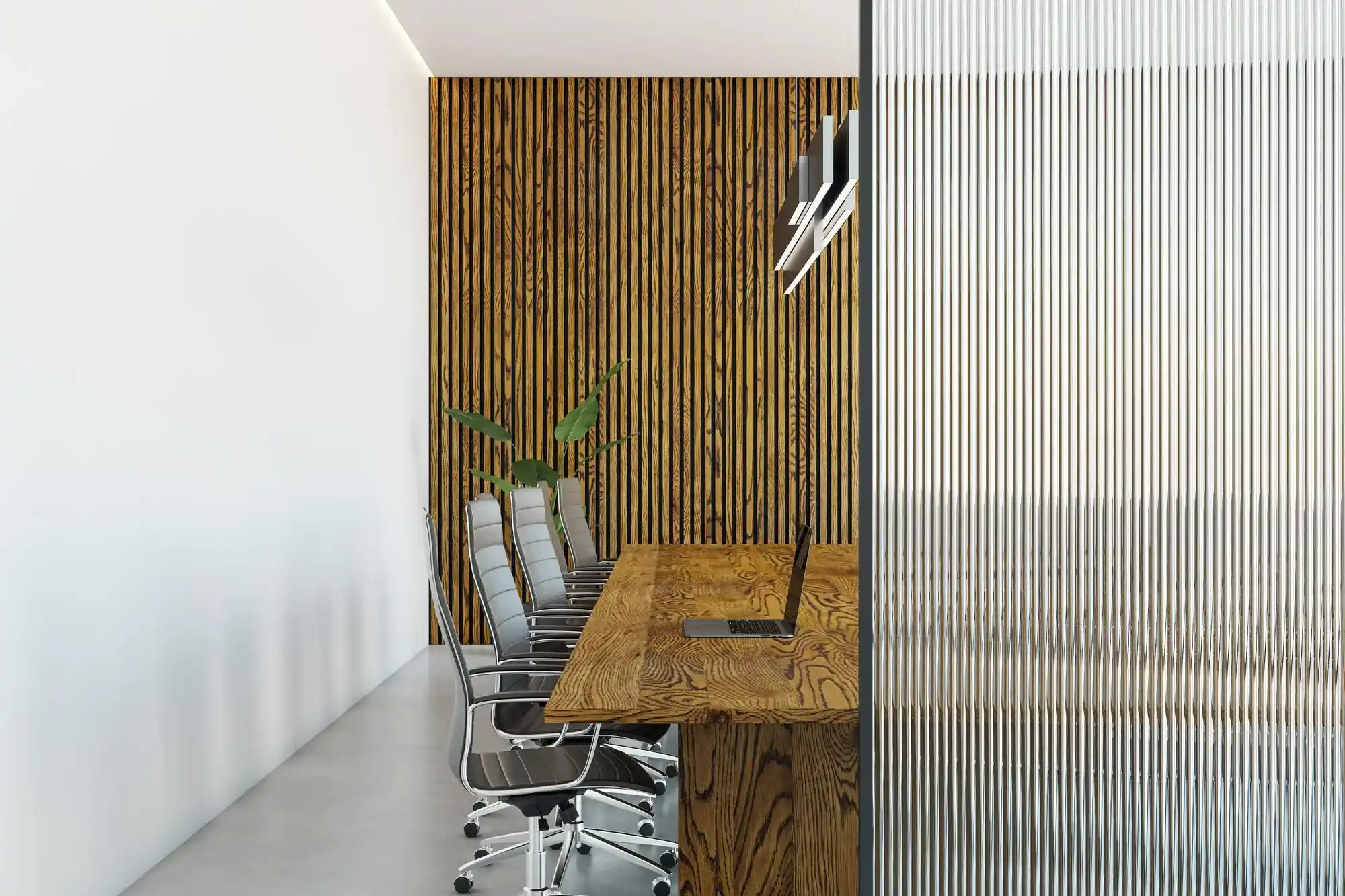
For offices with high ceilings or expansive hard surfaces, the “Akupanel” style of vertical wood slats is a game-changer for both aesthetics and sound quality. This deep dive into acoustic panelling reveals a dual-purpose solution that provides superior soundproofing.
The felt-backing is the secret to high sound absorption ratings; it is essential for preventing the echoes that typically plague large commercial spaces.
By trapping sound waves behind the timber slats, these panels ensure that conversations remain crisp and that the overall background noise is significantly dampened, allowing for much deeper concentration.
In addition to their technical prowess, these panels introduce a rhythmic linear texture that adds visual interest to long, empty walls. This architectural feature often removes the need for distracting artwork, as the slats themselves act as a sophisticated, minimalist statement.
Using oak or walnut slats brings a sense of warmth and depth to the environment, making even the largest commercial floors feel more intimate and inviting.
16. Use Planters With Sansevieria (Snake Plants) Or Rubber Trees
Incorporating greenery is a core tenet of the mid-century modern “indoor-outdoor” philosophy, but for a busy Singaporean office, the choice of species must be as practical as it is beautiful.
Sansevieria, commonly known as the Snake Plant, and the robust Rubber Tree are the architectural gold standards for commercial environments.
These plants require incredibly low maintenance, thriving in the indirect light often found in corporate suites and surviving the occasional weekend without watering. This reliability makes them an ideal investment for firms that want the benefits of nature without the need for a dedicated gardening staff.
Beyond their hardy nature, these specific plants act as powerful natural air filters. They are renowned for their ability to remove toxins like formaldehyde and benzene from the air while increasing oxygen levels, which has a direct, positive impact on employee focus and mental clarity.
From a design perspective, they provide “organic verticality.” The tall, narrow leaves of the Snake Plant or the broad, dark foliage of the Rubber Tree effectively soften the sharp, masculine corners of mid-century desks and shelving.
17. Use Sage Green Or Terracotta Accent Walls
While the 1950s certainly had its share of vibrant teals and oranges, the modern focus-driven office benefits most from the “muted” side of the MCM palette.
Sage Green is a particularly effective choice for workspaces due to its psychological properties; as a soft, desaturated hue, it promotes restfulness and significantly reduces eye fatigue during long stints at a computer screen.
In communal areas or brainstorming rooms, grounded Terracotta offers a different but equally valuable energy. This earthy red creates a “warm embrace” that fosters a sense of security and encourages open communication,perfect for collaborative zones where ideas need to flow freely.
The secret to making these bold choices work in a professional commercial context is balancing them with neutrals. Pairing Sage or Terracotta with crisp cream or off-white ensures the space remains bright and expansive.
18. Cork Flooring Or Wall Tiles
Cork is the ultimate “retro” material currently enjoying a significant resurgence in high-end Singaporean commercial design, primarily because it is unparalleled for acoustic control.
The unique cellular structure of cork acts as a natural vacuum, absorbing the sound of falling objects, clicking heels on the floor, and the general low-frequency hum of office chatter.
This makes it a naturally quiet alternative to cold commercial carpet or noisy hardwood, creating a serene auditory environment that is essential for staff who need to maintain a state of deep concentration.
The benefits of cork extend to physical well-being through ergonomic comfort. It possesses a natural “give” or squishiness that makes it exceptionally comfortable for employees who prefer standing desks or those who move frequently between departments.
This slight cushioning reduces leg and back strain, which can often be a silent killer of productivity. Visually, cork introduces a honey-coloured, natural texture that brings immense warmth to an office.
It serves as a sustainable, organic foundation that replaces the clinical feel of standard office flooring, proving that a commercial space can be eco-friendly, highly functional, and aesthetically sophisticated all at once.
19. Use Floor-To-Ceiling Curtains In Thick Fabrics
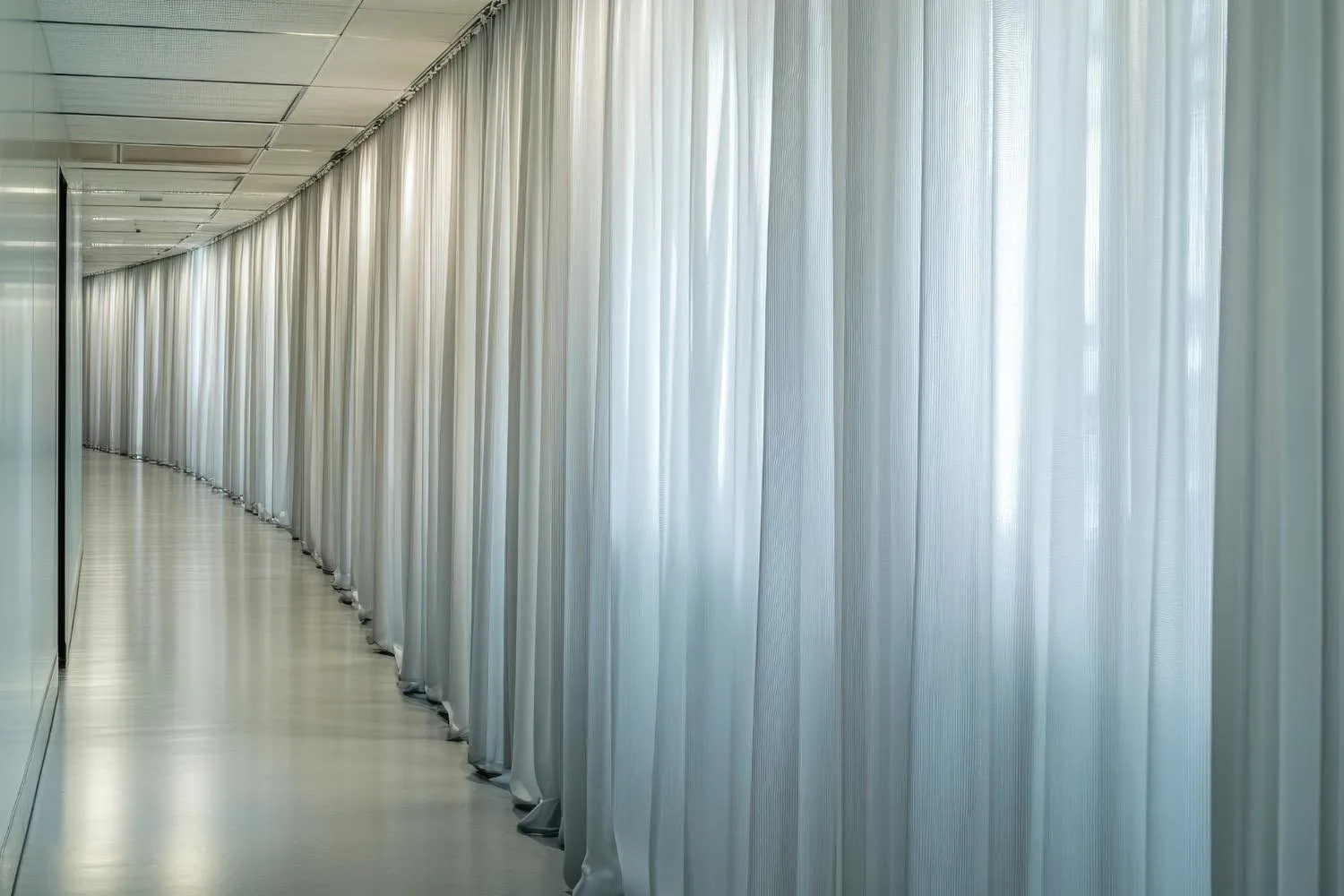
In modern Singaporean architecture, where floor-to-ceiling glass is a standard feature, managing the internal environment can be a challenge. Incorporating heavy drapery is a sophisticated solution reminiscent of high-end mid-century hotels, providing both luxury and utility.
These thick fabrics serve as a primary tool for acoustic damping; materials like heavy linen or velvet are exceptionally effective at “soaking up” sound that would otherwise bounce off glass partitions and hard floors.
This creates a muffled, library-like quiet that is essential for deep concentration and confidential boardroom discussions.
Beyond sound, these curtains offer superior light diffusion. During the “golden hour” when the sun sits low on the horizon, harsh light can create debilitating screen glare that halts productivity.
Thick drapery allows you to soften this sunlight, transforming it into a gentle, ambient glow that maintains a comfortable working environment. From a purely aesthetic standpoint, these vertical fabric elements are vital for softening the hard edges of a commercial space.
20. Use Natural Wood-Scented Diffusers
The sensory side of focus is often ignored in traditional office planning, yet the olfactory environment can profoundly impact mental performance. We recommend using scents associated with authentic MCM materials, such as Sandalwood and Cedar, to ground the workspace.
There is a strong neurological link between “woody” scents and mental clarity; these earthy aromas have been shown to lower heart rates and foster a sense of stability. By introducing these natural notes, you create a workspace that feels physically connected to the walnut and teak furniture surrounding the team.
Consistency is key when using scent to influence workflow. When a specific fragrance is used daily, it can actually trigger a “work mode” mental state, acting as a sensory cue that it is time to focus. This olfactory consistency helps employees settle into their tasks more quickly after arriving at the office.
Furthermore, this provides a unique opportunity for subtle branding. Creating a custom olfactory identity for your commercial space ensures that clients and partners associate a specific, premium scent with your firm’s professionalism, making your brand’s physical presence as memorable as your business results.
21. Small, Round Saarinen-Style Tables
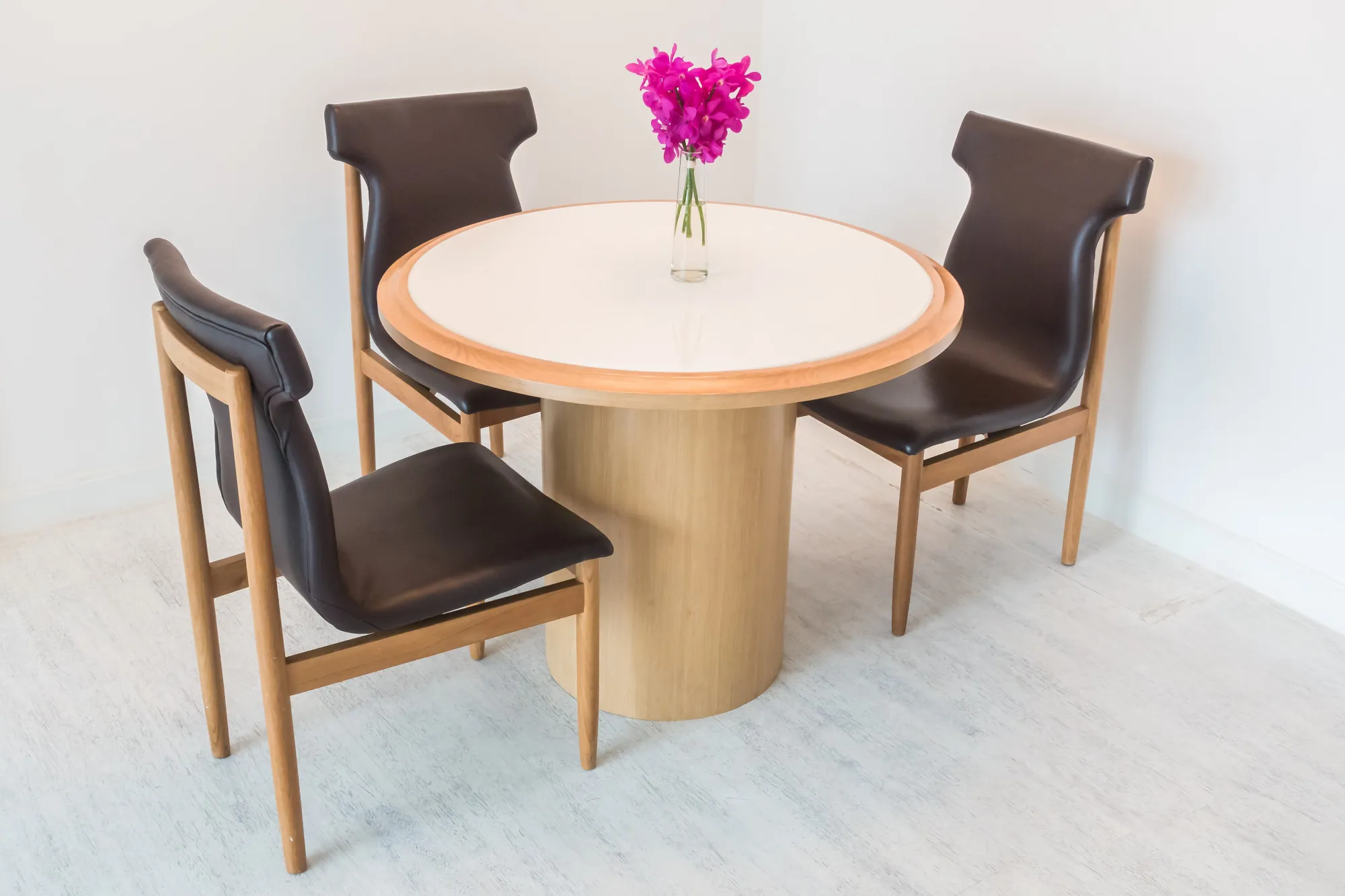
The iconic “Tulip” table, designed by Eero Saarinen, is more than just a piece of museum-worthy furniture; it is a strategic tool for enhancing office efficiency. These small, round tables are perfect for rapid-fire “huddle” sessions that require quick decisions without the baggage of a formal meeting.
One of the primary psychological benefits of this design is removing hierarchy. Because the table is round, there is no “head” of the table, which encourages equal participation and a more democratic flow of ideas. This layout is particularly effective for small startups or creative teams where every voice needs to be heard.
From a spatial perspective, the Tulip table’s space-saving pedestal is a revelation for compact offices. By avoiding the “leg clutter” associated with traditional four-legged tables, you allow more people to sit comfortably around the surface without knocking knees.
These versatile huddle spots can be tucked into unused corners or small alcoves, turning dead space into a productive brainstorming zone.
Whether used for a ten-minute morning sync or a private one-on-one, these tables ensure that meetings stay agile and focused, preventing the “meeting fatigue” that often occurs in larger, more rigid boardroom settings.
22. Use A Mid-Century Style Tambour-Door Cabinet
The “tambour” door is a masterclass in functional beauty, featuring thin wooden slats that slide smoothly into the body of the cabinet rather than swinging outward. In a high-traffic Singaporean office, this design serves a critical role in workflow preservation.
Because the doors don’t intrude into the walkway, hallways and narrow corridors remain entirely clear even when staff are accessing files or supplies. This prevents the physical bottlenecks that often disrupt the movement of people and ideas in a busy commercial environment.
Beyond simple storage, these cabinets are the perfect “hidden” tech hub for a modern firm. They provide a stylish way to conceal unsightly office equipment like printers, routers, and paper shredders, keeping the primary workspace free from technical clutter.
From an aesthetic standpoint, the vertical lines of the slatted tambour doors add a sophisticated architectural texture and rhythm to the room.
This subtle repeating pattern breaks up the flat surfaces of the office walls, providing a sense of craftsmanship and detail that elevates the overall professional tone of the executive suite.
23. Use Rolling Wood-Framed Whiteboard
Modern mid-century offices find ways to innovate the brainstorming process without resorting to the clinical, plastic look of standard whiteboards.
A rolling, wood-framed whiteboard is an essential tool for mobile collaboration, allowing the “idea board” to be moved directly to the team’s location rather than forcing everyone to relocate to a formal meeting room.
This flexibility keeps creative momentum high and allows for spontaneous problem-solving sessions that are often the catalyst for a firm’s best work.
These boards also function as highly effective dividers. By positioning a rolling board strategically, you can create a temporary wall to shield a project group during a deep-work sprint, providing a sense of enclosure and privacy.
To ensure aesthetic alignment with the rest of your interior, we recommend matching the wood frame of the board,usually in walnut or oak,to your desks and shelving.
This ensures that even your most functional tools contribute to a cohesive design language, proving that collaborative gear can be as visually compelling as it is practical.
24. Sputnik Chandeliers In Meeting Rooms
Lighting plays a dual role in an office: it must provide clarity, but it can also be used to distinguish different types of energy. Installing a Sputnik chandelier in a meeting room is a brilliant way to use “statement lighting” to energise a collaborative space.
The iconic “atomic” look, with its multi-directional arms and exposed bulbs, stimulates creative thinking and signals that the room is a place for high-energy brainstorming and big ideas. This visual cue helps staff mentally transition from the quiet focus of their desks to the active engagement required in a group setting.
A large Sputnik fixture also serves as a powerful visual anchor, defining the centre of the meeting room and providing a sense of symmetry and purpose to the furniture layout below. However, for a commercial space to remain functional, adjustable dimming is non-negotiable.
Being able to lower the intensity of these statement lights is crucial for digital presentations or video calls, while higher brightness levels are ideal for hands-on workshops. This versatility ensures that the room can adapt to various business needs while always maintaining its sophisticated, mid-century charm.
25. Integrated Banquettes With Vintage-Style Tufted Leather
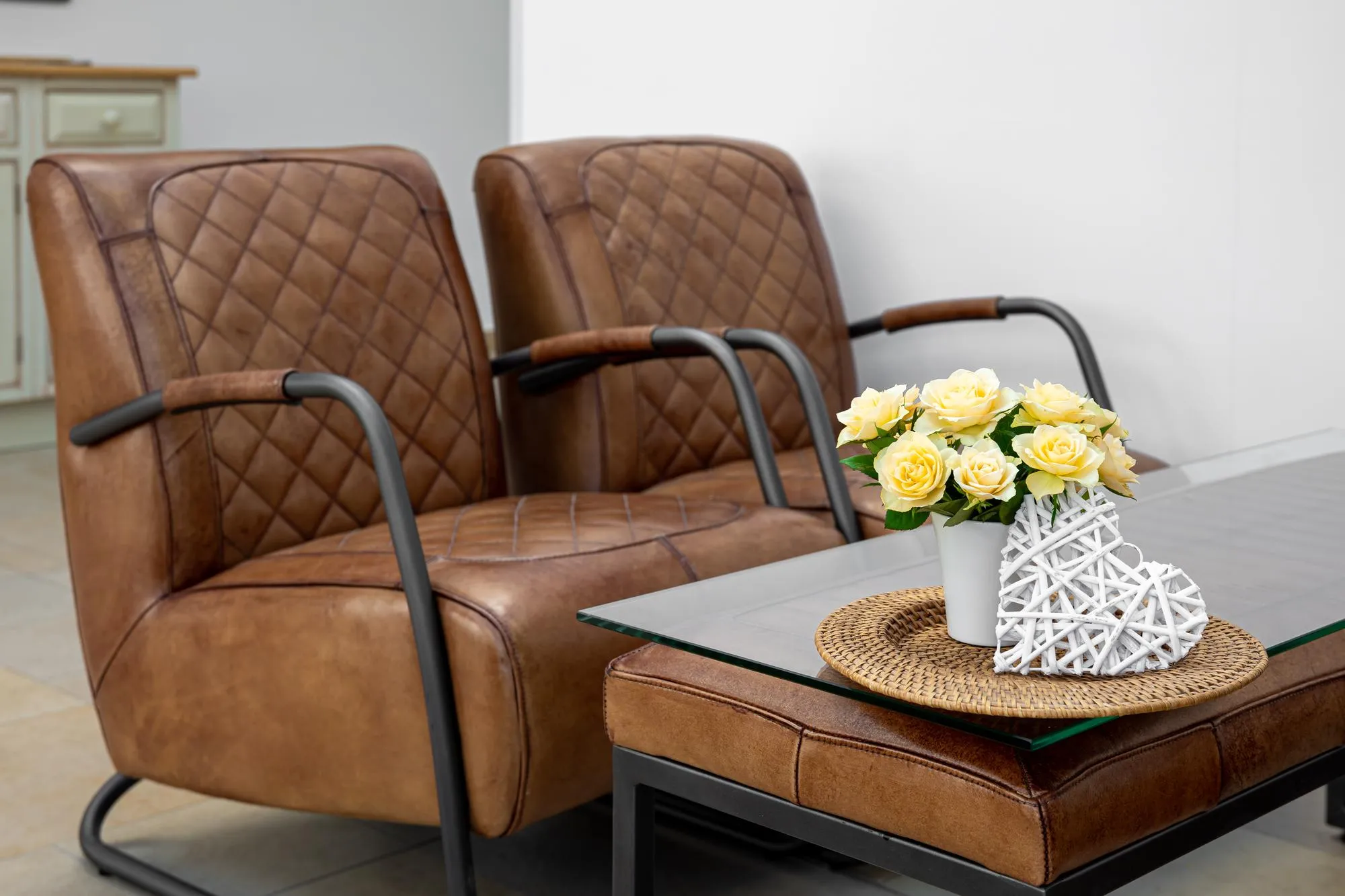
Integrated banquettes are a fantastic way to provide employees with a high-comfort “third space” that sits somewhere between a formal desk and a breakroom.
By utilising vintage-style tufted leather, you can recreate that coveted “café vibe” within the office walls,a setting where many professionals find they achieve their best focused laptop work.
This shift in environment allows for a change of pace that can reinvigorate a team during a long afternoon, providing a sense of relaxed productivity that traditional cubicles often lack.
From a management perspective, this setup offers durable luxury. Top-grain leather or high-end antimicrobial vinyl is perfect for high-use commercial zones, as these materials age gracefully and are remarkably easy to wipe down. Furthermore, banquettes are a masterclass in space optimisation.
By tucking seating into corners or along underutilised walls, you maximise the usable floor area of your Singaporean office. This creates additional “work zones” without the need for extra bulky desks, ensuring every square foot of your commercial lease is performing at its full potential.
26. Use Credenzas With Sliding Tambour Doors
The credenza is the ultimate office “clutter-killer.” By focusing on horizontal storage, these pieces keep the eye level low, which instantly makes a room feel more expansive and less oppressive than tall filing cabinets.
This sense of openness is essential for maintaining a clean visual environment where the mind can focus on strategy rather than being distracted by a wall of storage units.
The primary functional benefit is the paperwork purge. Messy stacks of active files, reference books, and stationery are easily hidden behind beautiful wood slats, leaving only a pristine timber surface on display. For a modern touch, we often recommend coffee station integration.
Utilising the top surface of a long credenza for a minimalist refreshment area,complete with a high-end espresso machine and neat rows of ceramic mugs,turns a storage unit into a social and functional hub.
27. Retrofit Vintage Sideboards As Charging Hubs For Tablets And Phones
Repurposing original MCM furniture for modern digital needs is a creative way to infuse character into a commercial set. By retrofitting a vintage sideboard as a dedicated charging hub, you achieve decentralised charging.
This encourages employees to move away from their primary desks to power up their devices, which effectively reduces “desk clutter” and prevents the distraction of constantly buzzing phones at the workstation. It turns a functional necessity into a stylish, shared amenity.
Integrating a one-of-a-kind vintage piece brings a sense of character and history that “catalogue” offices often lack. It communicates that your firm values craftsmanship and longevity,traits that resonate deeply with high-value clients.
28. Use Vertical Storage
Utilising the “height” of a room is a strategic way to keep the immediate work zone clear of distractions. By shifting storage upwards, administrators can ensure that the primary desk surface remains reserved for active, high-priority tasks.
High-hutch units are particularly effective for this; they allow for the storage of archive folders or reference materials used only once a week at the top, effectively removing them from the user’s direct line of sight while keeping them within the office footprint.
Vertical organisation also introduces the opportunity for wood cubbies, which are ideal for systematic mail and document sorting. These compartments provide a dedicated home for loose papers that would otherwise accumulate in messy horizontal stacks.
To maintain a professional atmosphere, it is vital to consider visual balance. Placing these taller units against solid walls ensures they do not block natural light or disrupt the flow of the room. This arrangement anchors the office, providing a sense of structural stability that allows the rest of the furniture to remain light and airy.
29. Wall-Mounting Storage Units
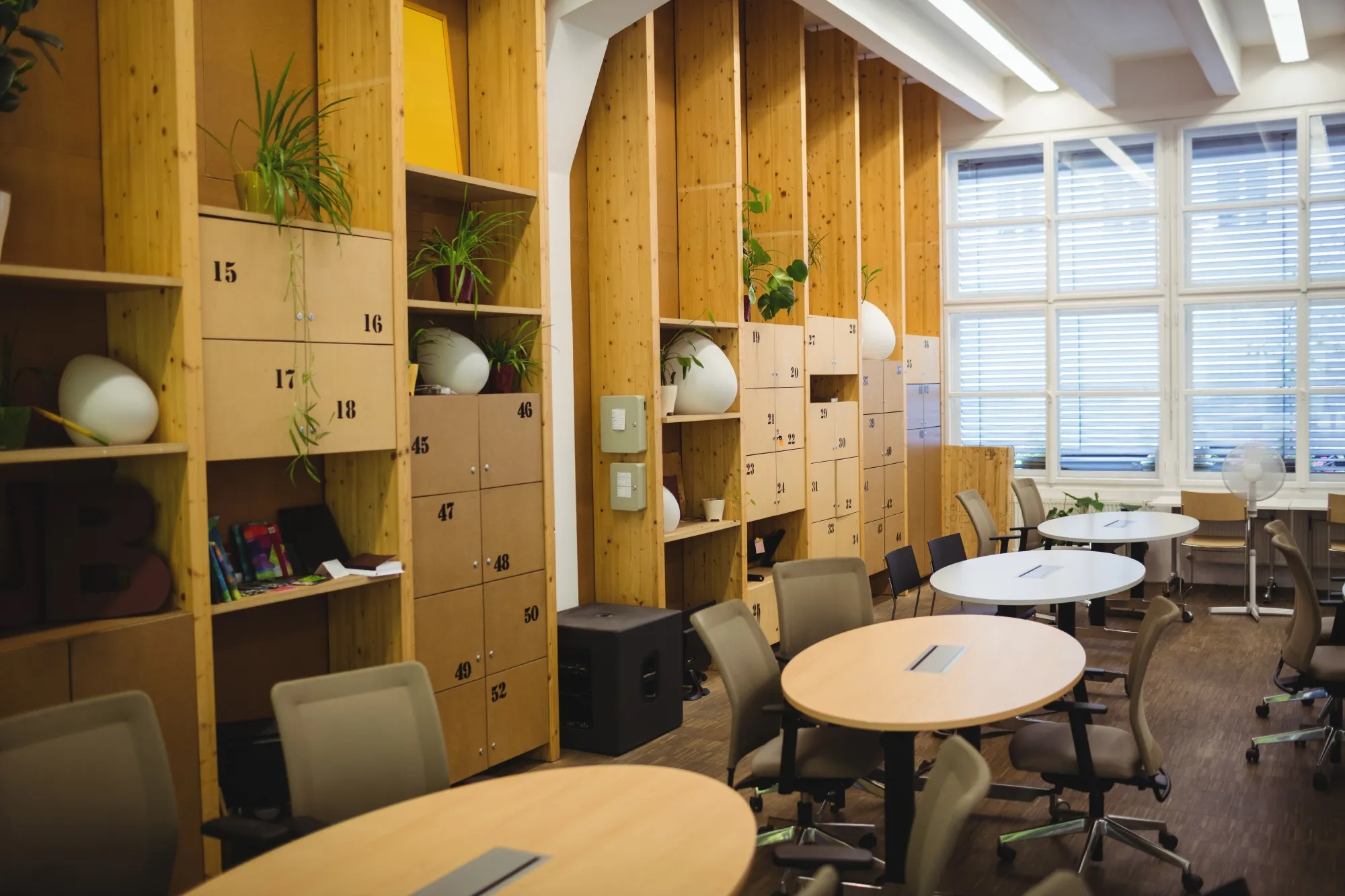
The “floating” furniture trend is more than just a stylistic nod to the mid-century era; it is a practical tool for creating a focused, modern office feel. Wall-mounting your storage units creates a powerful illusion of space.
By exposing more of the floor, the room feels significantly less cluttered and, on a practical level, becomes much easier for maintenance teams to clean. This reduction in visual “noise” at the ground level helps to lower the collective stress of the team, fostering an environment where ideas have room to breathe.
Beyond the aesthetic benefits, floating units offer superior ergonomic height. Administrators can mount storage at the exact reach level of the user, ensuring that frequently accessed items are retrieved without the need for awkward straining or bending.
This customisation is a hallmark of a bespoke professional environment. Removing the legs from traditional cabinetry results in a sleek modernism,a “futuristic-retro” look that feels incredibly current in a Singaporean commercial setting.
It combines the warmth of mid-century materials with the gravity-defying lightness of contemporary engineering.
30. Adopt The “One-In, One-Out” Rule For Office Decor
The final and perhaps most important tip for maintaining a focus-driven office is a commitment to the philosophy of maintenance. Adopting a “one-in, one-out” rule for office decor is essential for sustaining the aesthetic over the long term.
This disciplined approach prevents a sophisticated executive suite from slowly succumbing to “vintage clutter,” ensuring the space doesn’t inadvertently transition from a sharp “Mad Men” look into a disorganised thrift store appearance.
Every new piece of technology or decorative item must earn its place in the focus zone through sheer intentionality. If a new lamp or sculpture is introduced, an older, less functional item should be retired or relocated.
Encouraging teams to perform regular audits,clearing their “visual field” at the end of every Friday,ensures that the office starts each week as a blank canvas for productivity.
This habit reinforces a culture of precision and order, proving that the environment we work in is a direct reflection of the quality of work we produce.
Conclusion About The Mid-Century Modern Interior Design In Singapore
Implementing these mid century modern interior design ideas within the high-density, vertical landscape of Singapore is more than an aesthetic upgrade; it is a strategic business move.
In a city-state where every square foot of office space carries a premium, the MCM focus on lean silhouettes and multi-functional “form follows function” architecture ensures your workspace feels expansive rather than cramped.
To bring this vision to life with precision, consider partnering with Yangs Design Associates. Established in 2017, we are a leading Singapore-based firm that bridges the gap between creative interior design and practical contractor expertise.
Our team specialises in the local commercial sector,from the CBD to regional hubs,offering comprehensive Design & Build and Consultancy services that align with your specific brand identity and workflow requirements.
What sets us apart is our individualised approach; we don’t believe in “one size fits all.” Whether you need a full pre-lease assessment or a complete office overhaul, we provide the manpower and cross-sector expertise to deliver projects on time and within budget.
We manage the entire process from initial visualisation to meticulous quality control, ensuring your new environment is as structurally sound as it is visually compelling.
Ready to redefine your professional environment? We invite you to take advantage of a free consultation, non-obligatory quotation, and a complimentary build space allocation calculation to see exactly how your floor plan can be optimised.
To begin your office transformation, contact Yangs Design Associates today.
Frequently Asked Questions About The Mid-Century Modern Interior Design In Singapore
Can Mid-Century Modern Interior Design Ideas Work For A High-Tech Firm?
Absolutely. The “atomic age” roots of MCM celebrate innovation. By integrating modern tech,such as hidden wireless charging and acoustic felt panels,into a vintage silhouette, tech firms can achieve a “futuristic-retro” look that feels more inviting than a sterile, industrial office.
Is It Expensive To Implement An Mid-Century Modern Look In A Large Commercial Space?
Not necessarily. The core of the aesthetic is “clean lines.” You can achieve the look by prioritising a few “hero” pieces,like a classic boardroom table or lobby lighting,and then using cost-effective, minimalist modular furniture for the general workstations.
What Is The Most Effective Way To Manage Cables In A Mid-Century Desk Setup?
Since authentic vintage desks weren’t built for PCs, we recommend “retro-fitting” your furniture. Using brass-finished cable grommets and under-desk leather cable trays keeps the wiring organised without ruining the sleek, horizontal profile of the desk.
Does Mid-Century Modern Design Suit A Traditional Law Or Financial Firm?
It is an excellent choice. It offers a “soft-professionalism” that feels more approachable than heavy, traditional mahogany furniture, yet remains far more sophisticated and stable than the “playful” designs often found in modern co-working spaces.
How Can I Ensure My Office Doesn’t Look Like A “Museum” Or A Film Set?
The key is the “Modern” in Mid-Century Modern. Mix vintage-inspired furniture with contemporary elements like matte black steel partitions, high-end LED lighting, and minimalist digital displays.

